


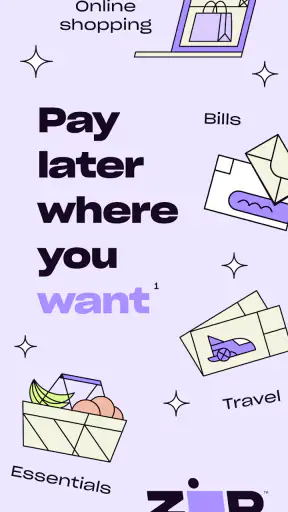
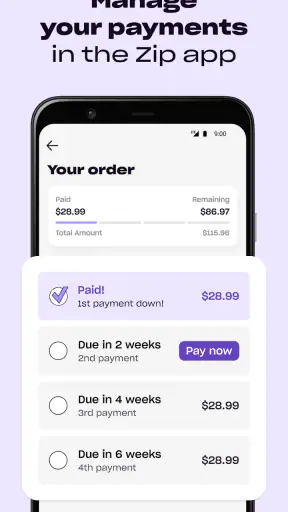

I started looking at Zip as a practical shopping tool rather than just another payment app. Its main appeal is simple: it lets me use flexible payment terms when I shop at participating merchants, including places where Visa is accepted. That can be useful when a planned purchase arrives before payday, but it also changes how carefully I need to think about the total cost and the repayment schedule.
In my experience, the app makes the most sense when one person is clearly responsible for the account and the purchases made through it. That point becomes especially important in a household where phones, shopping lists, or payment cards are shared. Zip can help coordinate a purchase, but it should not be treated like a family wallet with automatic boundaries between users. The account holder needs to know exactly who is using it, what is being bought, and how the resulting payments will be handled.
How Zip fits into everyday household shopping
A realistic example is a shared home preparing for an unexpected expense. Perhaps a household appliance needs replacing, or several people need to combine their plans for a larger order. One person can use Zip at checkout, then keep track of the repayment commitment while the others transfer their share through whatever arrangement the household already uses. The app can make the purchase possible at the moment it is needed, but it does not remove the need for clear communication.
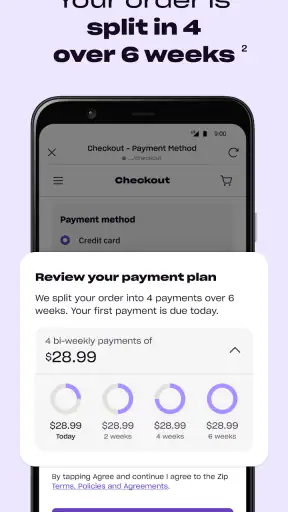
That distinction is easy to overlook. Flexible payment is not the same as a discount, and it is not free money. The useful question is not only whether the first payment fits the budget. I also ask whether the remaining payments will still be comfortable after rent, utilities, food, transport, and other scheduled expenses are covered. When I use a service like this, I prefer to decide the repayment plan before opening the checkout screen.
Zip is listed as a free app in the shopping category, and its developer is Zip, Co. The app has built a substantial user base, with more than five million installs and an average rating of 4.7 from roughly one hundred seven thousand ratings. Those figures suggest that many shoppers find the basic experience worthwhile, but popularity does not replace checking the terms attached to an individual purchase.
The app is suitable for everyone from an age-rating perspective, yet that does not mean every purchase method is suitable for every age group. In a household, an adult should remain responsible for the account, payment method, and repayment decisions. A younger family member may help choose an item or add something to a shared list, but giving someone access to make purchases without discussion can create confusion quickly.
Starting with one accountable account holder
The cleanest setup is to choose one adult as the account owner and make that boundary obvious from the beginning. I would avoid passing a logged-in phone around casually, especially when the device is also used for ordinary shopping. A person who taps through a checkout quickly may not realize that the purchase is being placed under someone else’s repayment responsibility.
This is less about distrust and more about avoiding accidental commitments. In a shared home, people often assume that a saved card, shopping account, or open checkout belongs to everyone. With Zip, the account holder should be the person who understands the payment schedule and can review the purchase afterward. If another household member wants to buy something, I would agree on the item, amount, and repayment plan before handing over the device.
One practical habit is to keep a short household note showing the purchase date, the item, who agreed to contribute, and when each person will reimburse the account holder. That note does not need to be complicated. Its value is that it separates the app’s payment responsibility from the informal promise that someone else will pay their share. The account holder remains able to see the commitment instead of relying on memory.
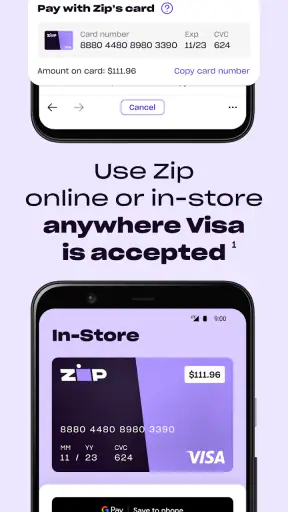
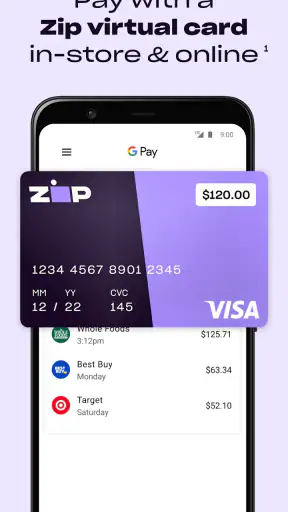
I also recommend checking the final checkout details rather than assuming every merchant handles the process in exactly the same way. Zip’s store summary describes shopping with flexible payment terms and using it anywhere Visa is accepted, but the actual checkout experience can still depend on the merchant and the transaction. I would confirm the amount, the schedule shown for that purchase, and any applicable conditions before approving it.
That last check is particularly useful for shared shopping. A family member might compare the shelf price with the amount displayed at checkout, while the account holder checks the payment timing. Both views matter. The item may be affordable in total but awkward for the household’s cash flow during the following weeks.
Coordinating purchases without losing track
Zip works best in a household when it supports a decision that has already been made, rather than becoming a spur-of-the-moment shopping trigger. I find it helpful to divide purchases into three groups: necessary items, planned items, and tempting items. Flexible payments can be reasonable for the first group if the household has room in its budget. The second group needs a calendar check. The third group is where I would be most cautious.
For shared purchases, I would have one person create the final basket and another person review it before checkout. This catches small problems that are easy to miss on a phone: duplicate items, a different size, an unwanted add-on, or a delivery option that changes the total. The second review is not a Zip feature; it is a household workflow that makes using the app more deliberate.
A useful but non-obvious trade-off is that splitting responsibility informally can make a purchase feel cheaper than it really is. If four people each promise to contribute, the account holder still has to deal with the payment schedule if one person forgets or changes their mind. I would therefore treat promised contributions as uncertain until they have actually been set aside. That approach prevents a shared order from becoming one person’s unexpected burden.
Another good habit is to avoid stacking several unrelated Zip purchases close together. Individual checkouts can look manageable when viewed separately, while the combined schedule is much harder to follow. Before approving a new purchase, I would review existing commitments and ask whether the new one would overlap with them. The app can help with the payment arrangement, but the household still needs its own complete picture.
This is where Zip differs from paying directly with a debit card or using a standard shopping app. A normal shopping app may make it easier to compare products, save items, or monitor delivery, while a bank card gives an immediate view of money leaving the account. Zip adds flexibility at checkout, but that flexibility introduces another layer to monitor. For someone who already has a reliable budget and needs timing flexibility, that can be useful. For someone who wants the simplest possible money trail, direct payment may be better.
Age, trust, and shared-device boundaries
The Everyone rating makes Zip broadly accessible as an app, but household access still deserves careful thought. I would not interpret an age rating as permission for every person using a shared tablet or phone to make financial decisions. A child might use the device for ordinary apps, and a teenager might help with shopping, yet neither situation automatically means they should have unsupervised access to an adult’s Zip account.
The safest boundary is straightforward: the account holder signs in, reviews the order, and approves the purchase. Other people can discuss what is needed without holding the account credentials or using the account independently. If a household wants a teenager to practice budgeting, I would start with a written shopping plan and a fixed amount of their own money, not with open access to a flexible payment account.
Shared devices create another source of friction. Notifications, saved sessions, and checkout screens can reveal purchase information to anyone who picks up the phone. I would use the device’s normal security protections and avoid leaving the app open in a common area. I would also check the screen after a purchase so that the next person does not accidentally continue from an unfinished checkout.
There is a social side to this as well. If one partner uses Zip for a household purchase, both people should know whether the item is being paid from joint funds or reimbursed separately. If the arrangement is not discussed, a convenient checkout can become a disagreement later. In my view, the best use of the app in a shared home is transparent: everyone knows who approved the purchase and what responsibility follows.
Trust matters even more when friends share a house but do not share finances. I would be reluctant to let a roommate use my Zip account simply because we are ordering household supplies together. A better approach is for the person who is comfortable managing the purchase to place it, then collect the agreed share before or immediately after ordering. If that arrangement feels awkward, paying directly or using a shared expense tool may be the cleaner option.
What the current app experience suggests
The app has been available since May 24, 2019, and the current version is 1.252.1, with support for operating systems from version 8.1 onward. That makes it accessible on a wide range of older compatible devices. I still would not install it on a phone that the household can no longer secure or update properly, because any shopping and payment app deserves a device with a working screen lock and a clear owner.
Zip’s strongest quality is convenience at the moment of purchase. Instead of abandoning a necessary order because the timing is inconvenient, I can consider a structured payment option and decide whether it fits. The app is also more flexible than a merchant-specific financing tool when I shop across different stores, since its purpose is not limited to one retailer.
Its weakness is that convenience can make a commitment feel less immediate. Paying in stages may reduce the pressure at checkout while increasing the amount of planning required afterward. I would not recommend it to someone who regularly forgets bills, has unpredictable income, or is already using several payment plans. In those situations, a debit card, cash envelope, or simple savings plan may provide clearer limits.
I also see a difference between using Zip for a planned replacement and using it for everyday extras. A broken essential can justify examining flexible payment options carefully. Repeated small purchases are harder to notice and can quietly fill a household’s future budget. My own rule would be to use the app for a specific reason, record the commitment, and avoid treating the available payment option as a shopping limit.
The app’s rating and review volume make it look established rather than experimental: it has around fifty-seven thousand written reviews alongside its larger rating total. I take that as a helpful sign that the basic service has been used widely, but I would still read the exact terms shown for my transaction. Payment products can involve conditions that matter more than a general app rating, especially when returns, cancellations, or missed payments enter the picture.
When another shopping method is the better choice
If I already have the money available, paying directly is usually simpler. A debit card keeps the transaction in one place and avoids creating another schedule to remember. A credit card may offer its own protections or rewards depending on the issuer, although it also requires disciplined repayment. The right choice depends on the household’s existing system, not just on which button is fastest at checkout.
For a family that wants one shared view of planned spending, a budgeting app or a spreadsheet may be more useful than Zip. Those tools can help coordinate contributions before anyone orders. Zip becomes valuable afterward, at the payment stage, when the household has already decided that spreading the cost is worth the added tracking.
For a single retailer, that retailer’s own payment option may be easier to understand, particularly if returns and order changes are handled in the same account. On the other hand, shoppers who move between merchants may prefer Zip’s broader shopping role. The trade-off is that a broader service can require more attention to the details of each purchase.
I would also skip Zip when the purchase is optional and the only reason to proceed is that the initial payment looks comfortable. Waiting, saving, or choosing a less expensive item can be the better financial decision. Flexible payments are most useful when they solve a timing problem, not when they disguise that the item is outside the budget.
My household verdict
After considering how it works in a shared home, I see Zip as a convenient tool that needs firm personal boundaries. It can help an adult manage a planned purchase when paying the full amount immediately is inconvenient, and it can work across ordinary shopping situations rather than being tied to one store. The free download and broad device support make trying it straightforward.
My recommendation is to keep the account with one responsible adult, agree on shared purchases before checkout, and record every commitment outside the app as well. I would never rely on a child, roommate, or partner’s verbal promise as the only plan for repayment. The app can organize the transaction, but household coordination still depends on people being clear with one another.
Zip is a good fit when flexibility solves a defined cash-flow problem and the account holder can comfortably manage the follow-up payments. It is not the right choice for someone who wants spending to stop immediately at the point of purchase, or for a household that has no dependable way to coordinate shared expenses. Used selectively, it can be helpful. Used casually on a shared device, it can make responsibility less clear than it should be.
For me, that balanced view is the key. I would use Zip for a deliberate purchase, review the terms shown at checkout, and make sure everyone involved understands who owns the commitment. With those habits, the app feels practical rather than impulsive. Without them, paying directly or saving first is often the more comfortable and transparent alternative.


